
How People Buy Art in 2026: Why Every Artist Needs Their Own Website
The art market has changed dramatically. Today's collectors rarely plan a trip to an art gallery—they discover artwork online through search, social media and recommendations. Here's how artists can adapt and sell more successfully.

For decades, artists relied on galleries, exhibitions and art fairs to reach collectors. Today, the buying journey has changed dramatically. While galleries still play an important role, most collectors now begin their search online, often long before they ever step into a physical gallery.
Whether someone discovers a painting through Google, social media, Pinterest, an interior design website or a recommendation from a friend, their first interaction with an artist is increasingly digital. In many cases, they don’t go looking for an art gallery—they discover artwork while browsing online.
Understanding how collectors find and buy art today is essential for every artist. In this article, we’ll explore how buying behaviour has changed, where collectors discover new artwork, and why owning your own website has become one of the most valuable investments an artist can make.
How People Buy Art Today
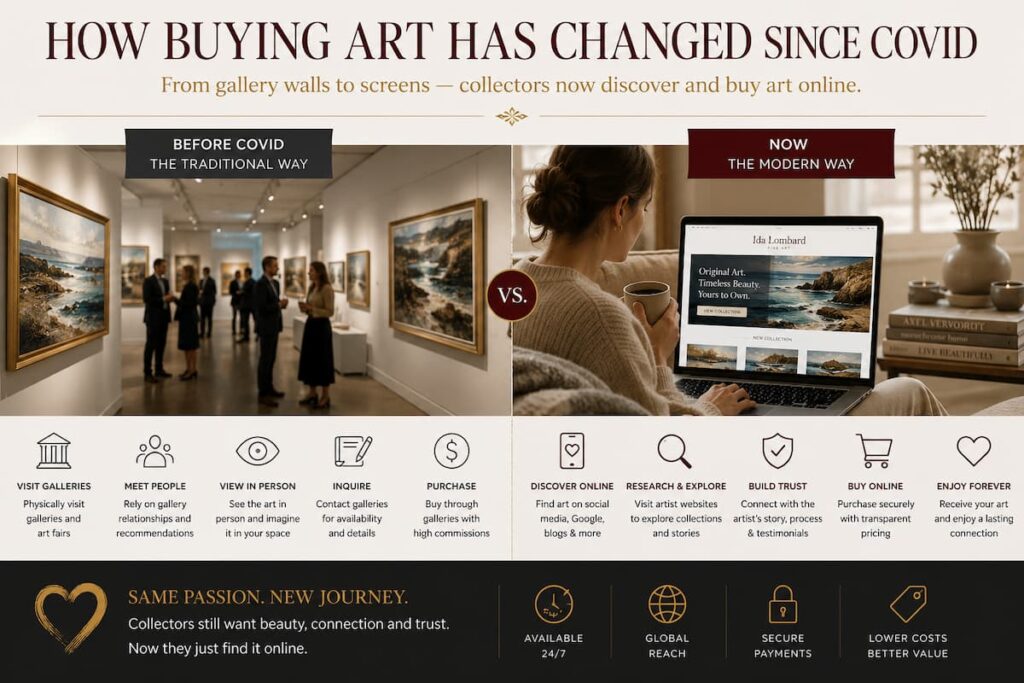
The COVID-19 pandemic accelerated a shift that was already underway. When galleries closed and art fairs were cancelled, collectors turned to digital channels to discover and purchase artwork. Many people bought original art online for the first time and realised that the experience could be both convenient and enjoyable.
Even after galleries reopened, those new buying habits remained. Today’s collectors are comfortable researching artists online, comparing styles, viewing artwork on different devices and making enquiries or purchases without ever visiting a physical gallery.
Rather than replacing galleries, the internet has expanded the way art is discovered. A collector might first encounter an artwork on Google, Instagram or Pinterest, visit the artist’s website to learn more, and only then decide to enquire or buy.
This doesn’t mean physical galleries have lost their value. They continue to introduce collectors to new artists, provide trusted curation and create memorable viewing experiences. However, they are no longer the only gateway between artists and buyers. Increasingly, the artist’s own online presence influences whether a collector takes the next step.
The Modern Collector’s Journey
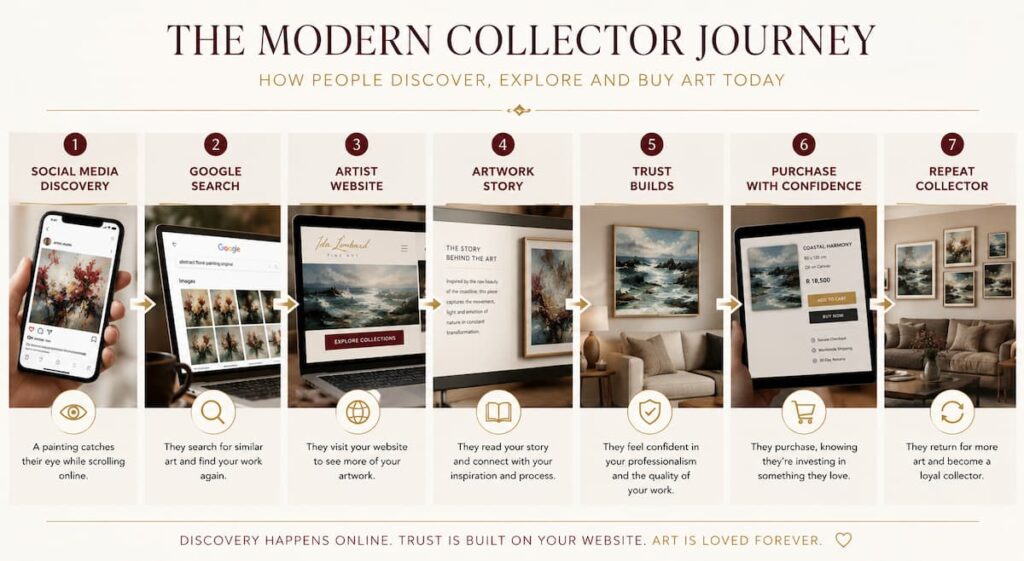
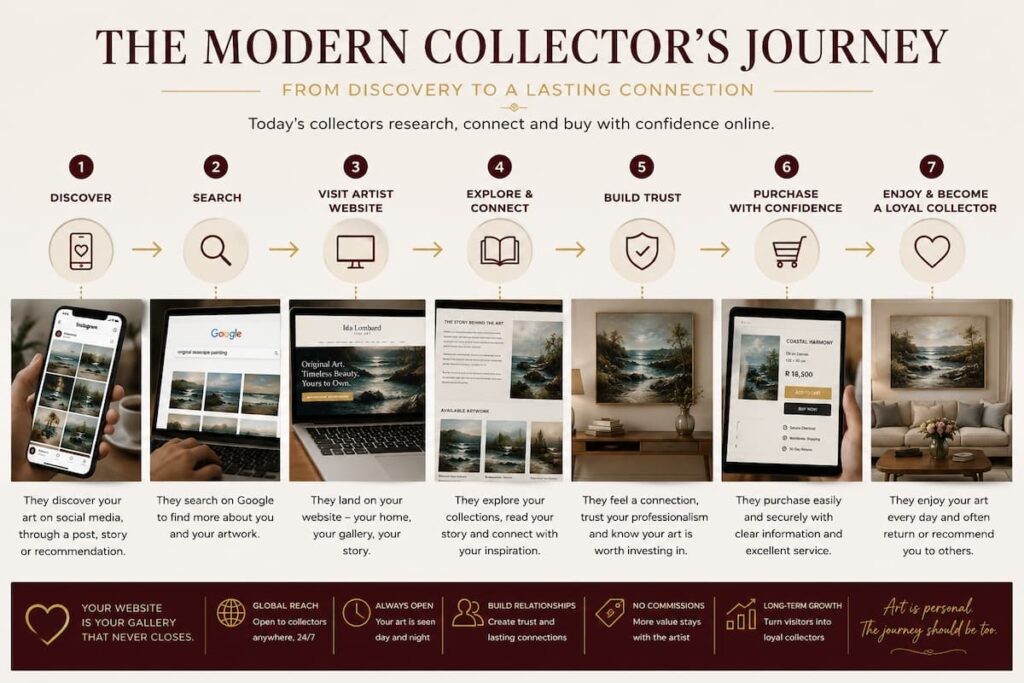
Most people don’t wake up on a Saturday morning thinking, “Today I’m going to buy a painting.” Instead, they discover artwork while doing something else. They might be browsing social media, searching for decorating ideas, reading an article about interior design, looking for gifts, or researching an artist whose work someone recommended.
In that moment, a single painting captures their attention. They stop scrolling. They click. They become curious.
From there, they want answers. Who created this artwork? Is it an original? What does it cost? Is it available? Can it be shipped? Can they trust the artist? The easier it is to answer these questions, the more likely they are to continue their buying journey.
This is why discoverability has become one of the most important factors in selling art. Collectors cannot buy artwork they never find. An artist may create exceptional work, but if it isn’t visible where people are already spending their time, opportunities are lost before they even begin.
Traditional galleries benefit from foot traffic. Visitors often discover artwork simply because they happen to walk past the gallery. Independent artists rarely enjoy that advantage. Instead, their website becomes their digital gallery—open around the clock and accessible from anywhere in the world. Every search result, social media post, Pinterest pin and shared link becomes another doorway leading collectors to their work.
Where Collectors Discover Art Today
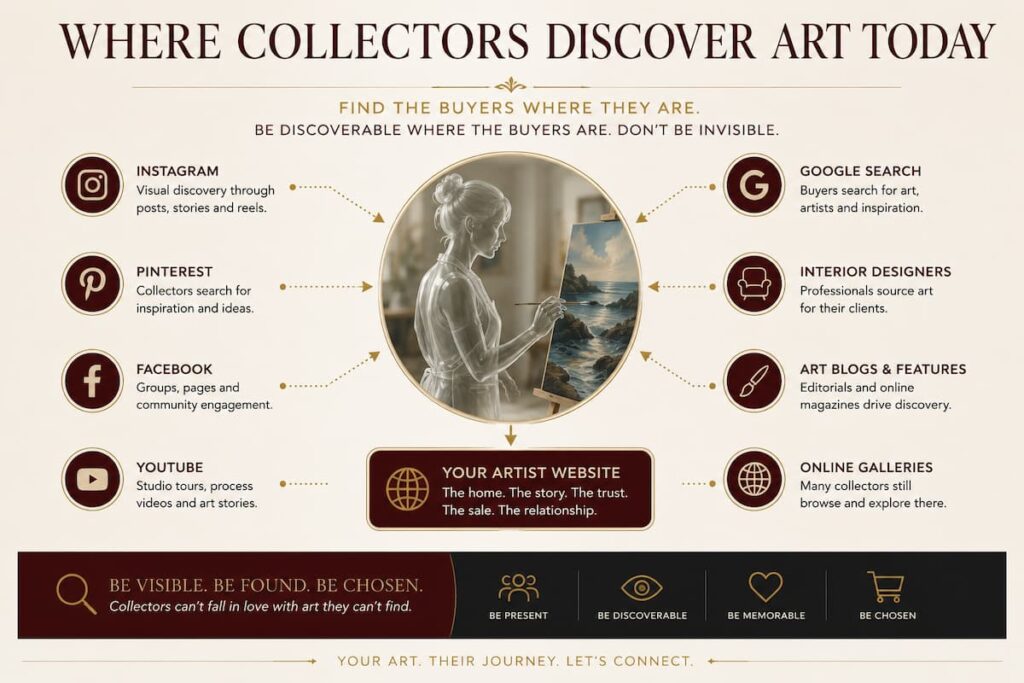
The internet has become the world’s largest art discovery platform. While collectors still visit galleries, exhibitions and art fairs, many now discover new artists online long before they see their work in person. Every online interaction creates an opportunity for an artist to be found by someone who may never have visited a local gallery.
Today’s collectors discover artwork through many different channels, often without actively searching for art. A beautifully photographed painting shared on Instagram, a Google search for interior decorating ideas, a Pinterest board, an artist interview, or a recommendation from a friend can all spark the beginning of a collector’s journey.
Collectors commonly discover artwork through:
- Google Search
- Google Images
- YouTube
- Interior design websites and blogs
- Artist websites
- Online galleries and marketplaces
- Email newsletters
- Recommendations from friends, designers and collectors
Every one of these channels has one purpose: to introduce a collector to your work. The real decision-making happens afterwards. Once someone becomes interested, they want to explore more artwork, learn about the artist, understand the story behind the paintings and feel confident enough to make an enquiry or complete a purchase.
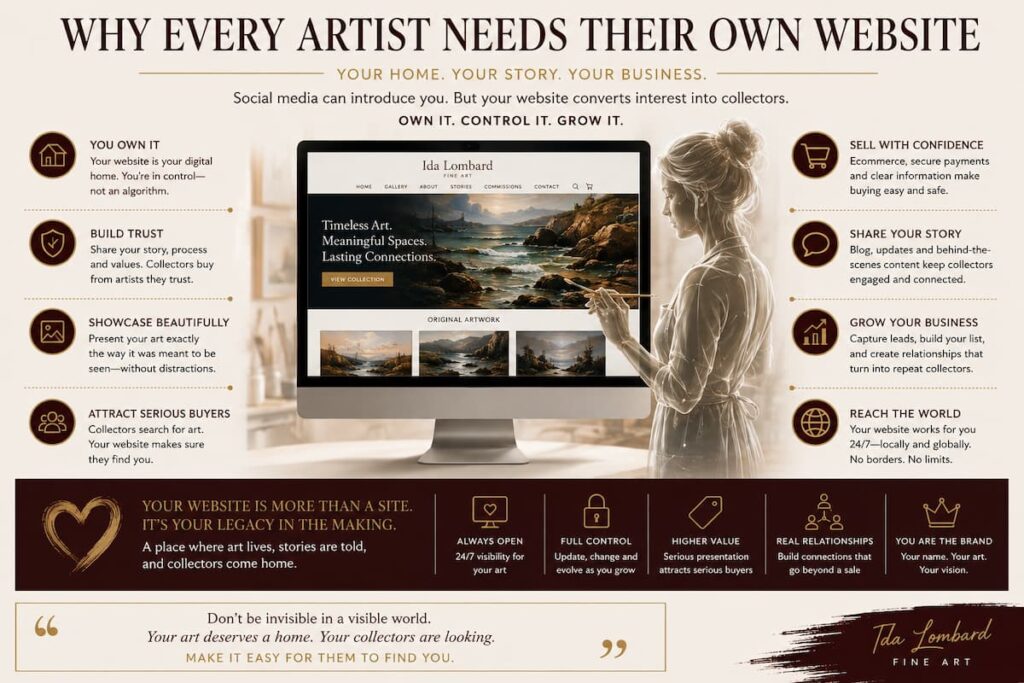
This is where your own website becomes essential. Social media platforms help people discover your art, but your website is where trust is built. It is the one place you control completely, where your portfolio, story, pricing, commission information and contact details are always available—without depending on changing algorithms or third-party platforms.
Why Every Artist Needs Their Own Website
Today’s collector doesn’t buy art the moment they discover it. They compare artists, read stories, look for reassurance and often return several times before making a purchase. Your website becomes the place where that confidence is built.
Unlike social media, your website isn’t competing with endless distractions. Visitors can take their time exploring your collections, learning about your creative process and understanding what makes your work unique. Every page helps strengthen trust.
Your website is also the one digital platform you truly own. Social media algorithms change, accounts can lose visibility overnight, and new platforms come and go. Your website remains your permanent online gallery—working for you 24 hours a day, every day of the year.
A well-designed artist website does far more than display artwork. It helps collectors:
- Discover your work through search engines.
- Learn the story behind each piece.
- View available sizes and framing options.
- Understand pricing and purchasing.
- Request commissions or purchase online.
- Join your mailing list for future collections.
Whether someone discovers your work through Google, Instagram, Pinterest, Facebook or a recommendation from a friend, your website is where curiosity becomes confidence—and confidence becomes a sale.
Social Media Isn’t the Destination
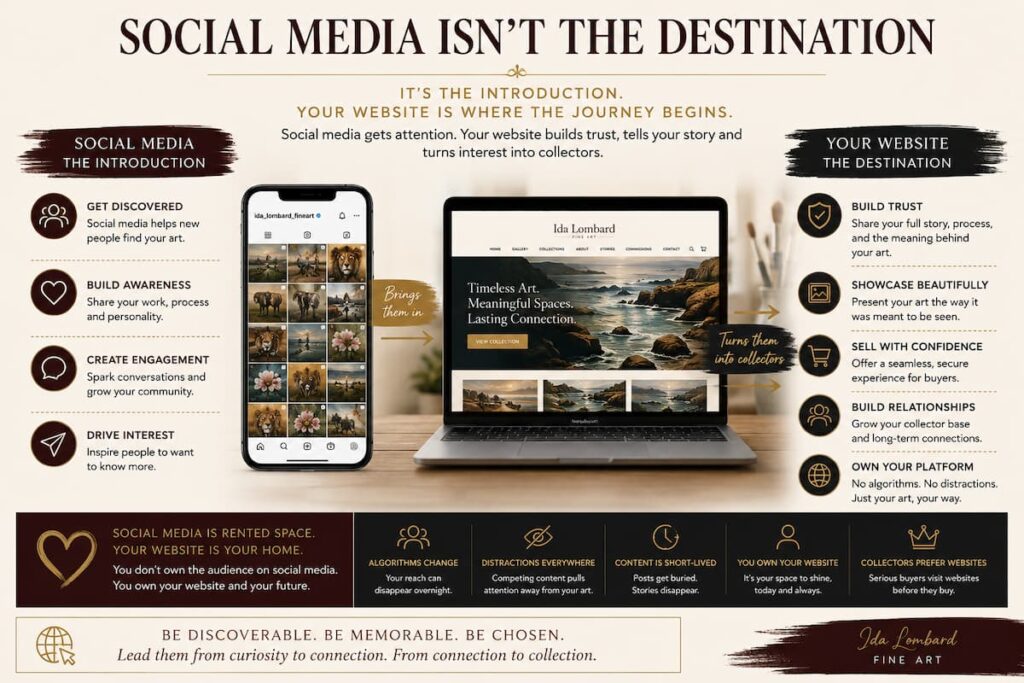
Social media remains one of the most powerful ways for artists to introduce their work to new audiences. A single post, Reel or Pinterest pin can reach thousands of people who may never have discovered your artwork otherwise.
But social media isn’t where most collectors make their final decision.
People scroll quickly. They become distracted. They save posts, follow artists and move on. When they’re genuinely interested, they want to know more. They visit your website to explore your portfolio, read your story, learn about your process and see whether your work fits their home, taste and budget.
Think of social media as the invitation and your website as the gallery.
Every post should encourage curiosity rather than try to close the sale. Instead of overwhelming people with prices and promotions, inspire them with your artwork, tell the stories behind your pieces and invite them to discover more on your website.
The strongest marketing strategy isn’t choosing between social media and a website—it’s using them together. Social media captures attention, while your website builds trust and provides everything a collector needs to make an informed purchase.
When these two platforms work together, they create a buying journey that feels natural. Collectors discover your work on social media, visit your website to explore further, return when they’re ready, and eventually become customers.
The Biggest Mistake Artists Make
Many artists believe they need more followers before they can sell more artwork.
In reality, followers don’t automatically become collectors.
Some artists with tens of thousands of followers struggle to make consistent sales, while others with much smaller audiences sell regularly because they have a professional website that builds trust and makes buying easy.
The real goal isn’t to keep people on social media. It’s to give them a reason to visit your website, where you control the experience, showcase your work professionally and guide them towards making a purchase.
Followers are rented.
Your website is owned.

The Future Belongs to Discoverable Artists
The art world hasn’t stopped valuing galleries. They still play an important role in introducing artists to collectors, building reputations and creating memorable experiences.
What has changed is where the buying journey begins.
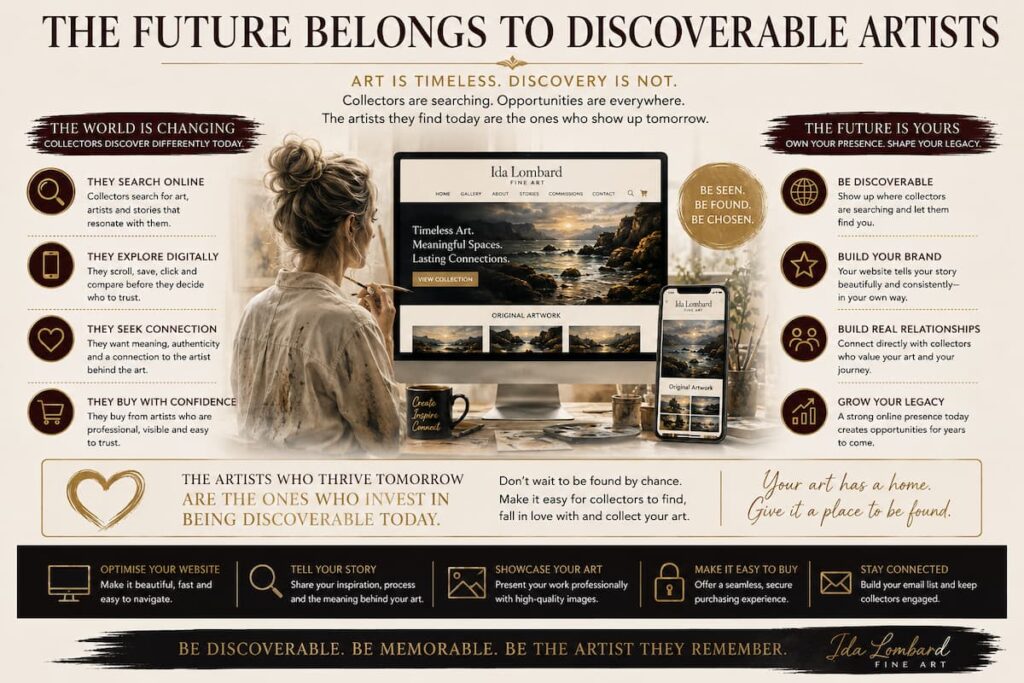
Today’s collectors are far more likely to discover an artist online than by walking into a gallery. They might find your work through a Google search, an Instagram post, a Pinterest board, a Facebook recommendation or an interior design article. By the time they reach your website, they’re already interested—they’re deciding whether to take the next step.
That’s why being discoverable has become just as important as creating exceptional artwork.
The artists who thrive over the next decade won’t necessarily be those with the biggest social media following or the most gallery representation. They’ll be the artists who make it easy for collectors to find them, connect with their story and confidently purchase their work.
Your website is no longer just another marketing tool.
- It’s your gallery.
- It’s your portfolio.
- It’s your shop.
- It’s your story.
And unlike social media, it’s a digital asset that belongs entirely to you.
Instead of asking, “How do I find more buyers?” perhaps the better question is:
“How do I make it easier for buyers to discover me?”
Because once people discover artwork they genuinely love, buying it becomes much easier.
References
Coming Next
Get More Art Collectors Online: Stop Chasing Buyers—Be Where They Already Are